




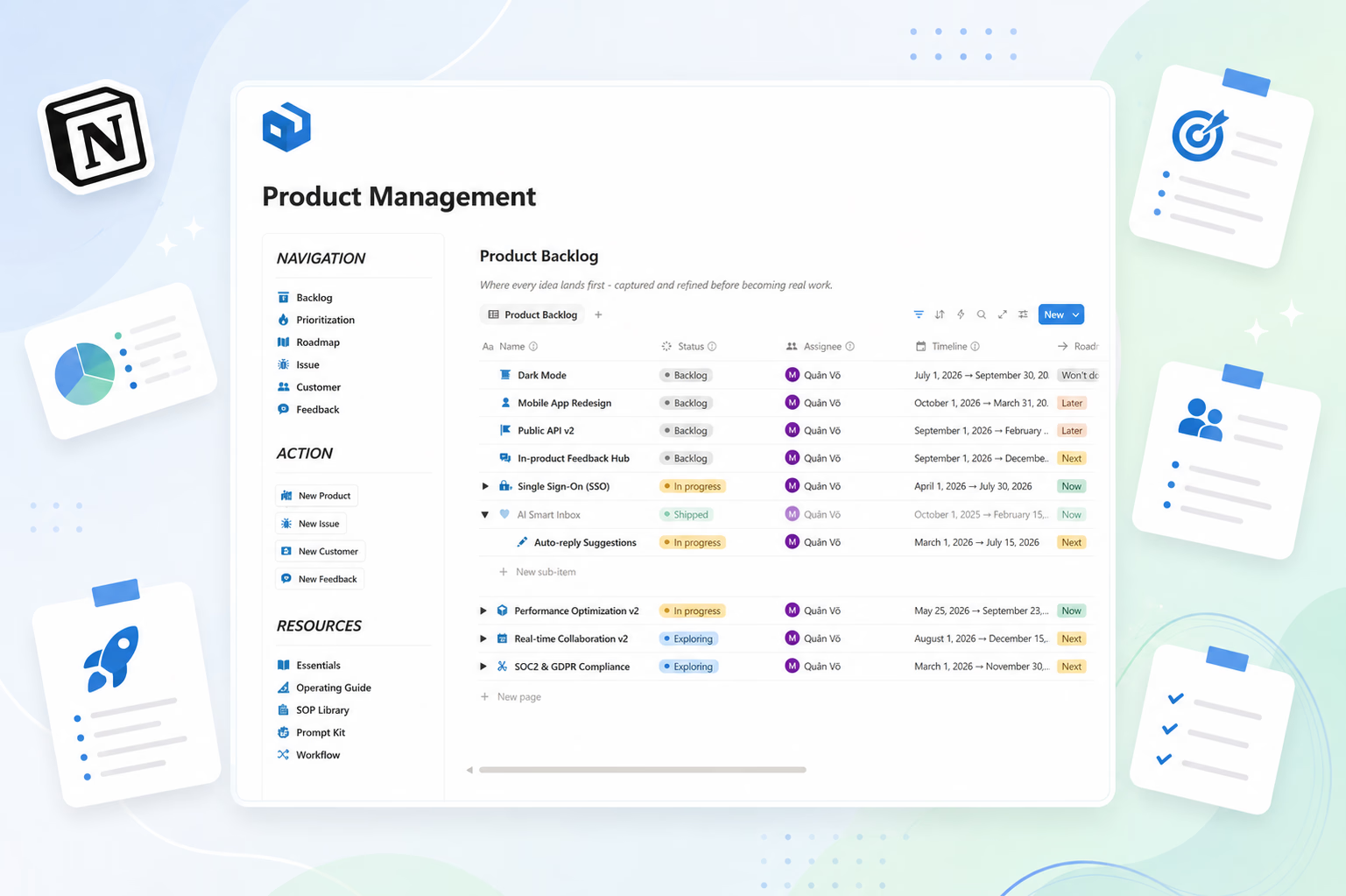
My backlog never had 200 ideas. It had 200 arguments waiting for a meeting. Sales wanted the enterprise feature, support wanted the bug cluster fixed, I wanted the "small change" that was somehow never small, and a customer mentioned something once so it carried political weight. Then the roadmap followed the loudest voice in the room — or worse, the highest-paid person's opinion.
This is where product prioritization frameworks helped me. Not because they make hard decisions easy, but because they force the team to argue with criteria instead of vibes. I am still learning this, so treat it as notes from someone figuring it out, not a verdict from an expert.
Reading through the reference guides, the practical lesson that stuck was simple: do not collect 15 frameworks like productivity Pokémon. Pick the one that matches your product stage. A discovery-stage product should not prioritize like a scaling one, and a team with no customer data should not pretend to run a data-rich model. Established sources frame prioritization the same way — as choosing the right method for your context rather than a single "best" framework. This article gives you a stage-based way to choose.
The short answer: choose by product stage
Here is the practical map.
| Product stage | Best framework | Why it fits |
|---|---|---|
| Discovery / early idea | Impact–Effort or Value vs Complexity | You need quick clarity with limited data |
| MVP planning | MoSCoW | You need to decide what is required now versus later |
| Post-MVP / early traction | RICE | You have enough signal to compare reach, impact, confidence, and effort |
| Growth stage | Weighted Scoring or DVF | You need to balance customer value, business value, and feasibility |
| Mature product | Kano or Opportunity Scoring | You need to improve satisfaction, not just ship more features |
This is the core point. The question is not "which prioritization framework is best?" The better question is: what kind of uncertainty are we dealing with right now? Different frameworks reduce different types of uncertainty.
Framework comparison: when to use, complexity, best-fit team
| Framework | When to use | Complexity | Best-fit team |
|---|---|---|---|
| Impact–Effort / Value vs Complexity | Early sorting when you need a quick view of value versus build difficulty | Low | Founders, small product teams, discovery teams |
| MoSCoW | Planning a release or MVP with fixed scope or a deadline | Low | Teams needing stakeholder alignment fast |
| RICE | Comparing backlog items with some user, effort, and confidence data | Medium | PMs managing growing backlogs |
| ICE | Fast scoring when speed matters more than precision | Low | Growth, experiments, small teams moving quickly |
| Weighted Scoring | When multiple business and product criteria matter | Medium–High | Cross-functional teams with clear strategic goals |
| DVF Scorecard | When you must balance desirability, viability, and feasibility | Medium | Teams deciding between product bets, not just tasks |
| Kano Model | When customer satisfaction and feature perception matter | Medium–High | Teams with access to customer research |
| Opportunity Scoring | Finding important but underserved customer needs | Medium–High | Mature teams with survey or feedback data |
| Cost of Delay | When delay has clear monetary impact | High | Teams with revenue, cost, or timing data |
| Product Tree / Buy a Feature | Collaborative prioritization with stakeholders or customers | Medium | Workshop-heavy teams, customer advisory groups |
Stage 1: Discovery — use Impact–Effort or Value vs Complexity
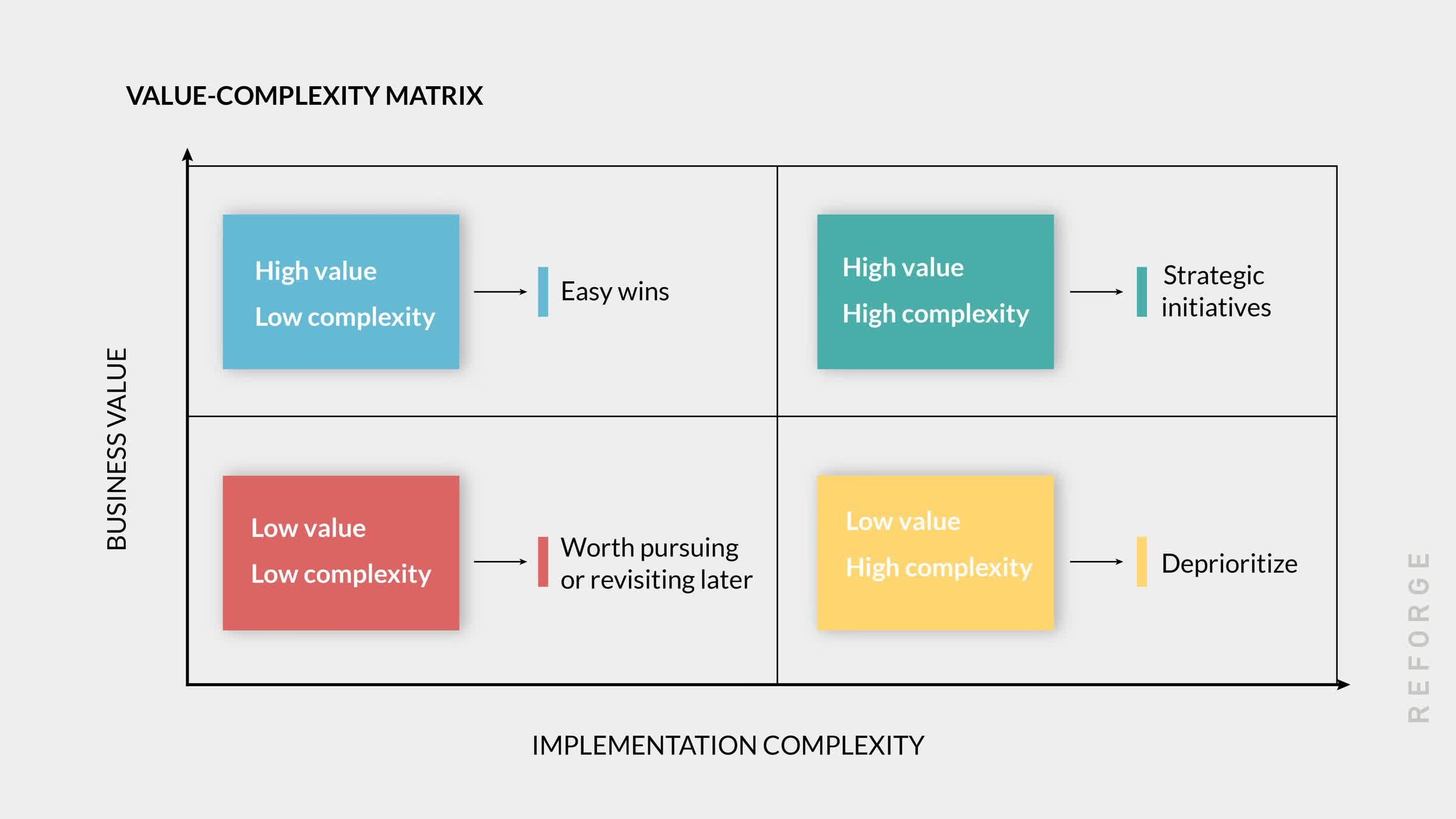
In discovery, you usually do not have enough data for complex scoring, and that is fine — do not fake precision. A simple 2x2 matrix works: high/low value against high/low effort. This mirrors the value-versus-effort quadrant many teams start with, comparing expected benefit against the cost of delivering it. The goal is not a perfect roadmap — it is separating "obvious next experiments" from "interesting but too heavy right now."
Example
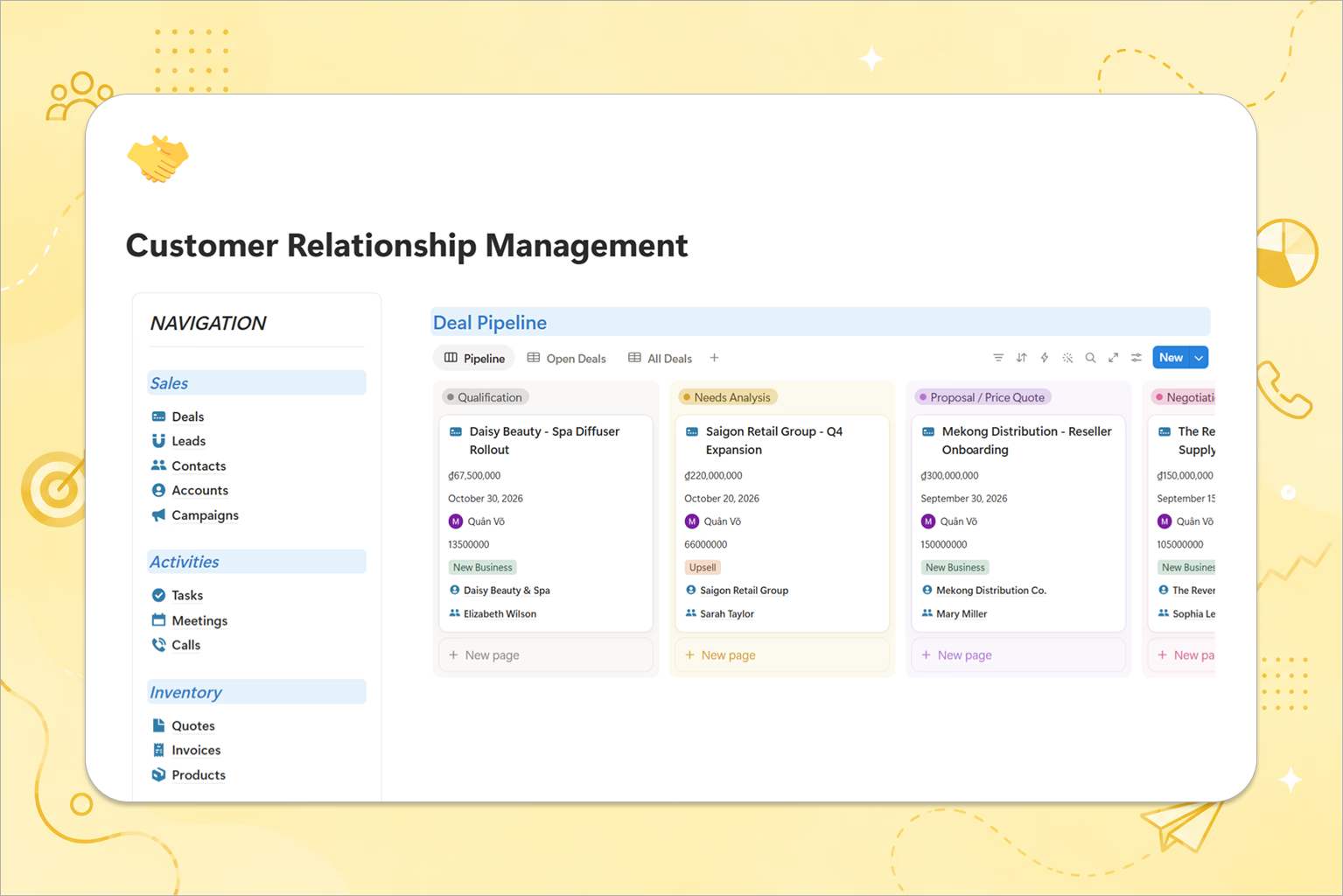
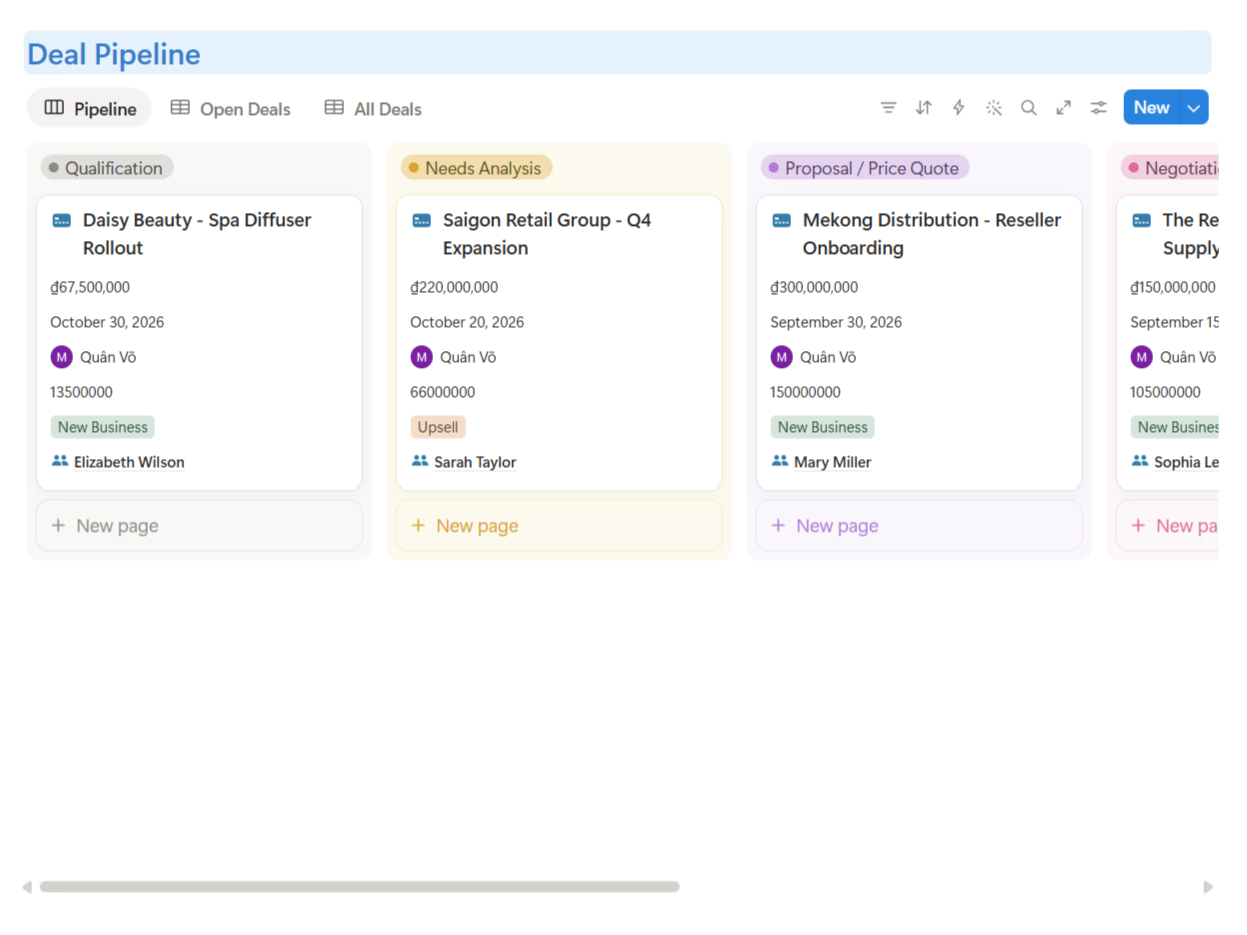
Building a Notion-based CRM product, my ideas might be: a follow-up reminder field, a full email automation engine, industry pipeline templates, and customizable dashboard colors. A quick Impact–Effort view often shows the follow-up reminder as high value / low effort, automation as high value / high effort, templates as medium/medium, and colors as low/low. The winner is not always the biggest idea — often it is the one that teaches you fastest.
Stage 2: MVP — use MoSCoW to prevent scope inflation
MVP planning has one enemy: "just one more feature." MoSCoW sorts features into Must have, Should have, Could have, and Won't have for now. It works well with a deadline and a need for shared language on scope. The danger is that everyone tries to make everything a Must Have, so I use a stricter test:
If the product can still deliver the core user outcome without it, it is not a Must Have.
Painful? Yes. Useful? Also yes.
MVP example
For a CRM template — Must Have: lead database, deal pipeline, Next Step, Next Action Date, basic conversation notes. Should Have: deal value, contact database, follow-up views, lost reason. Could Have: email templates, dashboard charts, industry pipeline examples. Won't Have for Now: complex automation, revenue forecasting, multi-team permissions. MoSCoW is not glamorous, but it protects the first version from becoming a feature buffet.
Stage 3: Post-MVP — use RICE when you have enough signal
Once the product has users, RICE becomes useful. It compares four factors:
- Reach — how many users or accounts will this affect?
- Impact — how much will it improve the outcome?
- Confidence — how sure are we, based on evidence?
- Effort — how much work will it take?
The common formula is RICE score = (Reach × Impact × Confidence) / Effort. The beauty of RICE is that it punishes fantasy through Confidence and Effort — a feature with huge promised impact but weak evidence should not automatically win.
RICE example from start to finish
Scoring three fictional CRM ideas over one month of work:
| Feature | Reach | Impact | Confidence | Effort | RICE score |
|---|---|---|---|---|---|
| Follow-up reminder view | 800 users | 2.0 | 80% | 2 person-weeks | 640 |
| Custom dashboard themes | 500 users | 0.5 | 70% | 1 person-week | 175 |
| Email automation builder | 300 users | 3.0 | 50% | 6 person-weeks | 75 |
Calculation: follow-up reminder = (800 × 2.0 × 0.8) / 2 = 640; dashboard themes = (500 × 0.5 × 0.7) / 1 = 175; email automation = (300 × 3.0 × 0.5) / 6 = 75. The automation builder sounds impressive, but RICE exposes the problem — lower reach, lower confidence, much higher effort. It does not mean never build it; it means it should not casually steal the roadmap.
Stage 4: Growth — use Weighted Scoring or DVF
Growth-stage products face harder trade-offs. You are no longer asking only "can we build this?" but also whether customers want it, whether it supports the business, whether it fits strategy, and whether it reduces churn. Weighted Scoring lets you define criteria and weights — say customer impact 30%, business value 30%, strategic fit 20%, effort 20%. DVF focuses on three lenses:
- Desirability: do customers want it?
- Viability: does it make business sense?
- Feasibility: can we build it with our resources?
Use Weighted Scoring when your team has clear strategic criteria. Use DVF when people keep arguing from different lenses — a designer for desirability, a founder for viability, engineering for feasibility — and you need all three on one table.
Stage 5: Mature product — use Kano or Opportunity Scoring
Mature products often need better judgment more than more features. Adding feature after feature can make a product heavier while satisfaction barely moves. Kano helps you see how customers perceive features — basic expectations, performance features, and delighters — and reminds you that some features only prevent dissatisfaction while others actively increase it.
Opportunity Scoring takes another angle: ask how important a need is and how satisfied customers are with the current solution. The opportunity appears where importance is high and satisfaction is low. A common formula is Opportunity = Importance + (Importance - Satisfaction). If a customer rates "quickly find stale deals" at importance 9 and satisfaction 4, that is 9 + (9 - 4) = 14 — a strong gap. Use these when you have real feedback or survey data; if you do not, go collect the signal first instead of pretending.
What about ICE, Cost of Delay, Product Tree, and Buy a Feature?
These are useful, but I would not make them the default for every team.
ICE
ICE scores Impact, Confidence, and Ease from 1–10. Use it when speed matters and slight imprecision is acceptable — great for growth experiments, weaker for serious roadmap commitments.
Cost of Delay
This focuses on the cost of not doing something now. Use it when timing has real monetary stakes — expiring contracts, revenue windows, compliance deadlines. Skip it if nobody can defend the money estimate, because fake dollars create fake certainty.
Product Tree
Product Tree works in workshops: stakeholders place ideas as roots, trunk, branches, or leaves to discuss how the product should grow. Use it when alignment and shared mental models matter more than numeric ranking.
Buy a Feature
This turns prioritization into a constrained budget exercise — participants "spend" limited resources on features they value. Use it when you want stakeholders or customers to reveal trade-offs, not just preferences. People call everything important until the budget is limited.
My practical recommendation
If your team is drowning in frameworks, simplify. The sequence I try to follow:
- Impact–Effort for rough sorting
- MoSCoW for MVP or release scope
- RICE for backlog ranking once you have enough signal
- Weighted Scoring or DVF for strategic trade-offs
- Kano or Opportunity Scoring for mature products with customer data
Do not use all five at once, or the framework stops helping and becomes another layer of work. Pick one primary framework for the decision in front of you, and add a second only if it reveals a different type of risk — RICE + MoSCoW to rank then scope, Kano + Cost of Delay to balance delight against timing, Weighted Scoring + Impact–Effort to align strategy then sanity-check effort. The framework should make decisions clearer, not create another meeting about the framework.
How to run prioritization in Notion
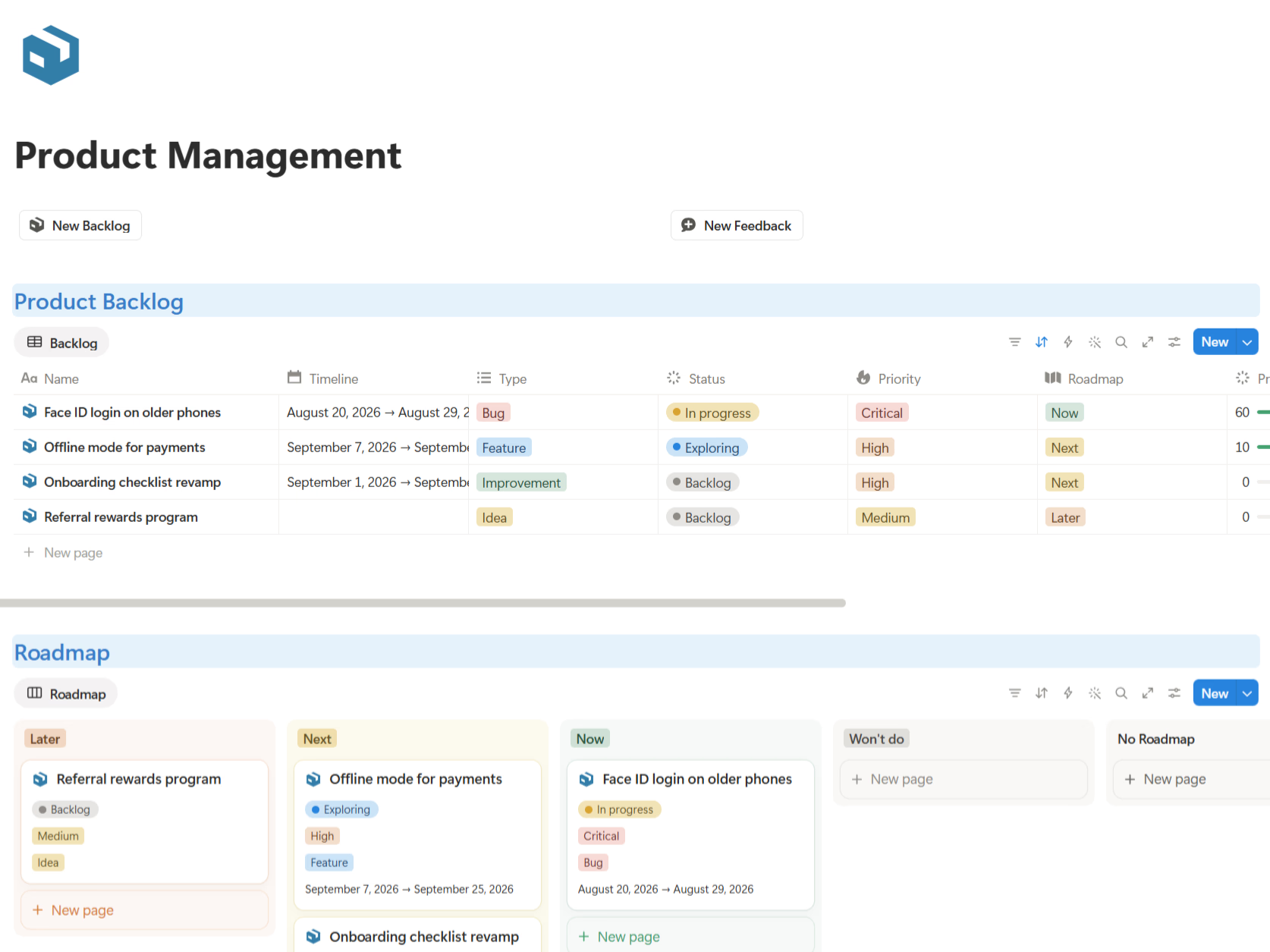
For a practical product system, create a feature database with these properties:
- Feature name
- Problem
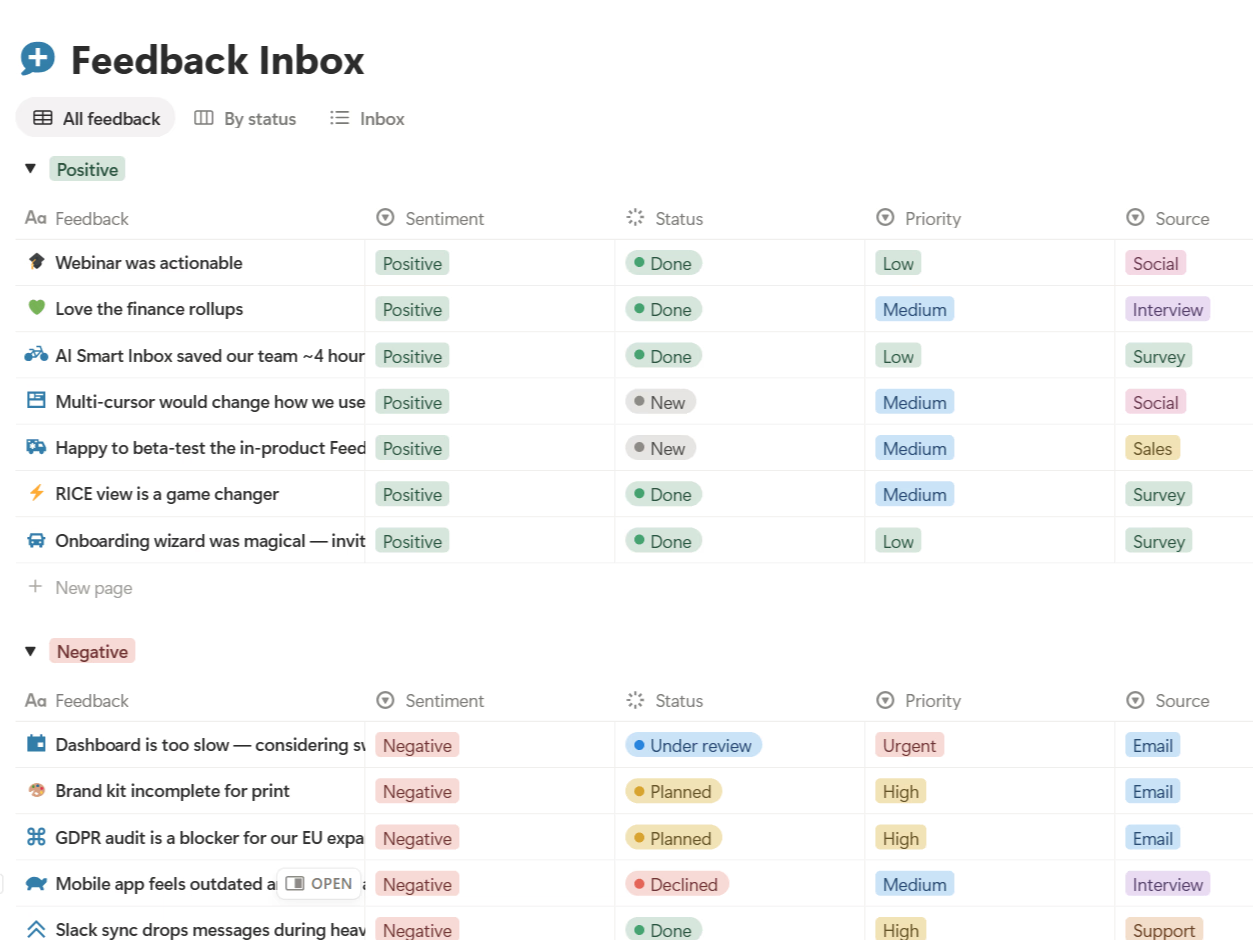
- Source (customer feedback, stakeholder, data, strategy)
- Product stage
- Framework
- Reach, Impact, Confidence, Effort
- RICE score
- MoSCoW category
- Status
- Roadmap quarter
- Decision note
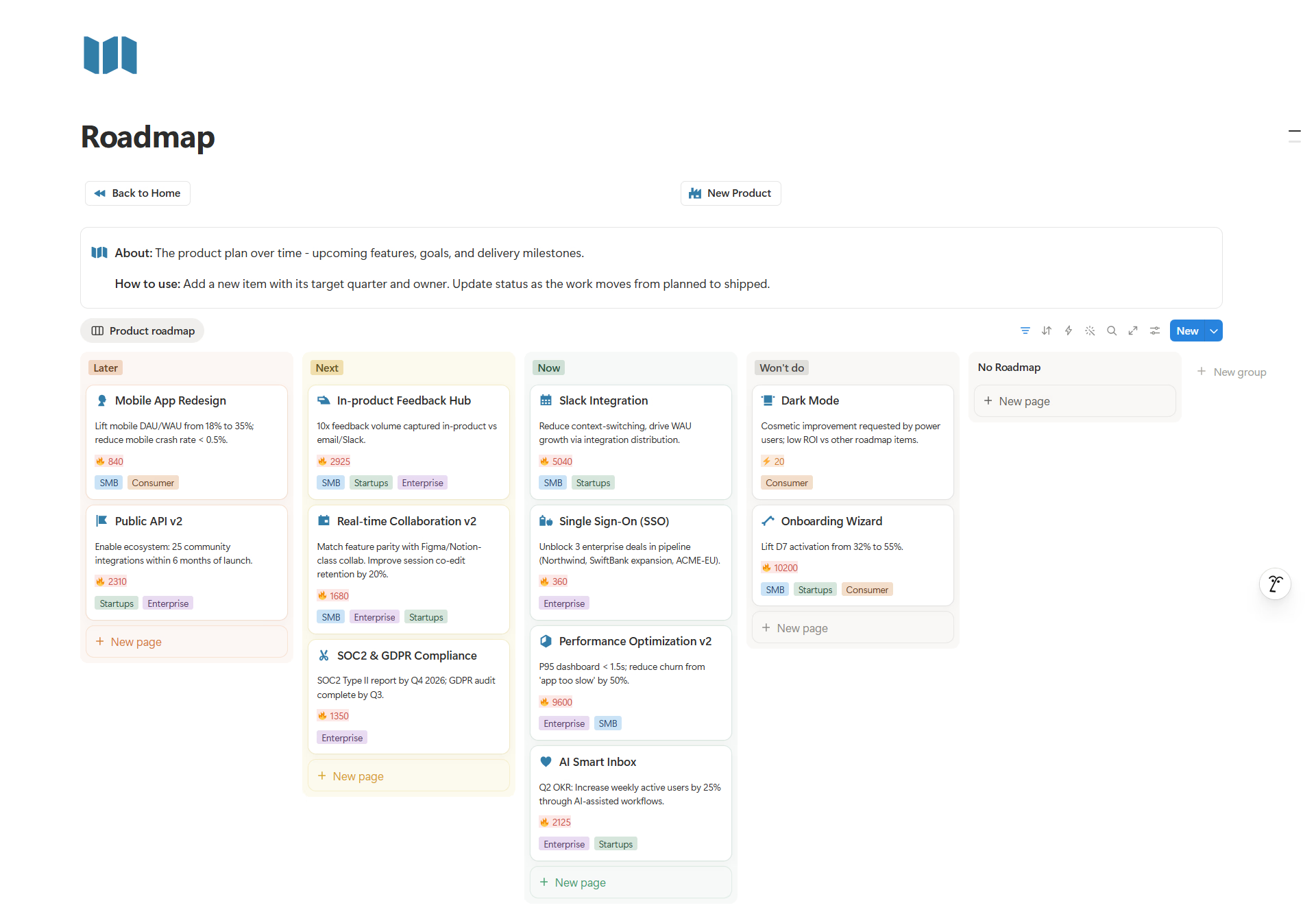
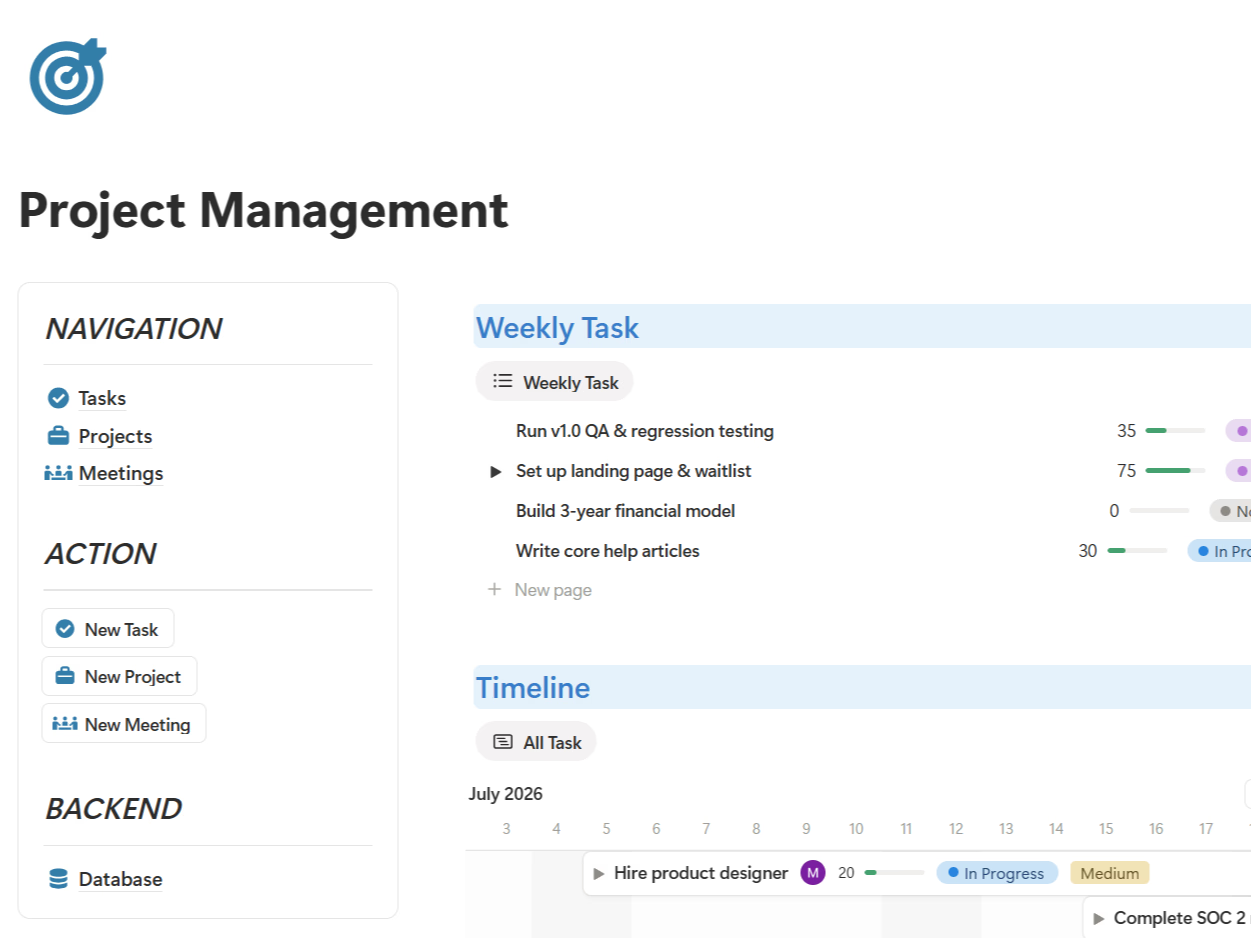
Then create views: backlog by RICE score, MVP scope by MoSCoW, high impact / low effort, stakeholder requests, customer-requested features, and roadmap. The real value is traceability — when someone asks "why are we building this instead of that?" you can show the criteria, score, decision note, and customer signal. That turns roadmap debate from politics into product thinking.
The bottom line
A prioritization framework is not a magic judge — it is a thinking tool. What I keep coming back to:
- Choose the framework by product stage, not popularity.
- RICE works best when you have enough signal to score reach, impact, confidence, and effort.
- Mature products need satisfaction and opportunity insight, not just more backlog sorting.
If your roadmap keeps losing to loud opinions, the problem is not your backlog size — it is your decision system.
👉 If you want prioritization, backlog, roadmap, feedback, and issues in one workspace, explore Product Package - Smart.
Want the broader product management guide first? Read What Is Product Management? A Beginner-Friendly Guide From Idea to Roadmap.
Sources I learned from:
- Atlassian — Prioritization Frameworks: https://www.atlassian.com/agile/product-management/prioritization-framework
- Productboard — Product Prioritization Frameworks: https://www.productboard.com/glossary/product-prioritization-frameworks/
- Product School — Ultimate Guide to Product Prioritization: https://productschool.com/blog/product-fundamentals/ultimate-guide-product-prioritization